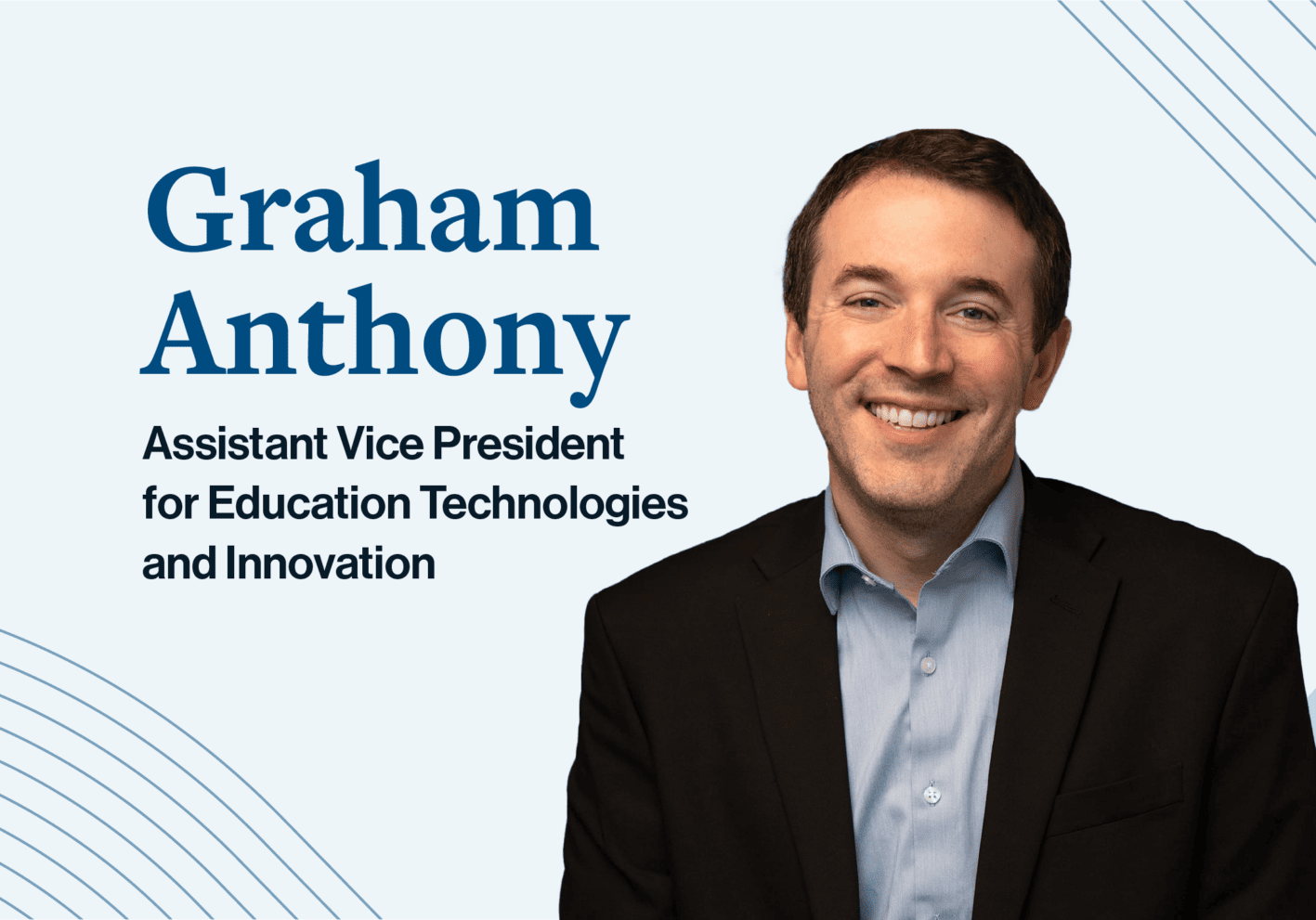
Read a new column from Graham Anthony, assistant vice president of for educational technologies and innovation, in Rochester Business Journal.
Academic integrity is one of the most urgent conversations in higher education right now, and also one of the most misunderstood. The instinct across many institutions has been to treat AI as a problem to detect and police. However, the more honest conversation is about what AI is revealing about the assessments we’ve been using all along.
In some disciplines, the integrity question is relatively straightforward. A math proof still requires a math proof. In disciplines where AI tools can credibly produce student-quality work the disruption runs deeper. When AI can generate a passable career development reflection essay, it forces us to ask what that assignment was actually measuring. The real value of a career reflection isn’t polished prose. It’s the student wrestling with their own lived experiences and taking agency over where they’re headed. AI can produce the artifact, but it can’t do the thinking. The best evaluators in these disciplines already know this. A colleague recently flagged a student’s lack of growth across reflections as evidence of disengagement, a judgment that requires knowing your students individually. That kind of assessment is harder to scale, but it’s exactly the kind AI can’t replicate.