In business, they say experience is everything. Yet opportunities for learning directly from real businesses are often the exception in business school.
Faculty at Golisano Institute for Business & Entrepreneurship recently piloted a new model for bringing concrete, tangible business problems into the classroom. The projects are sponsored by local businesses and develop over the institute’s quarter-long courses. They intend to not only anchor classroom learning but give the sponsoring business fresh perspectives on problems they face.
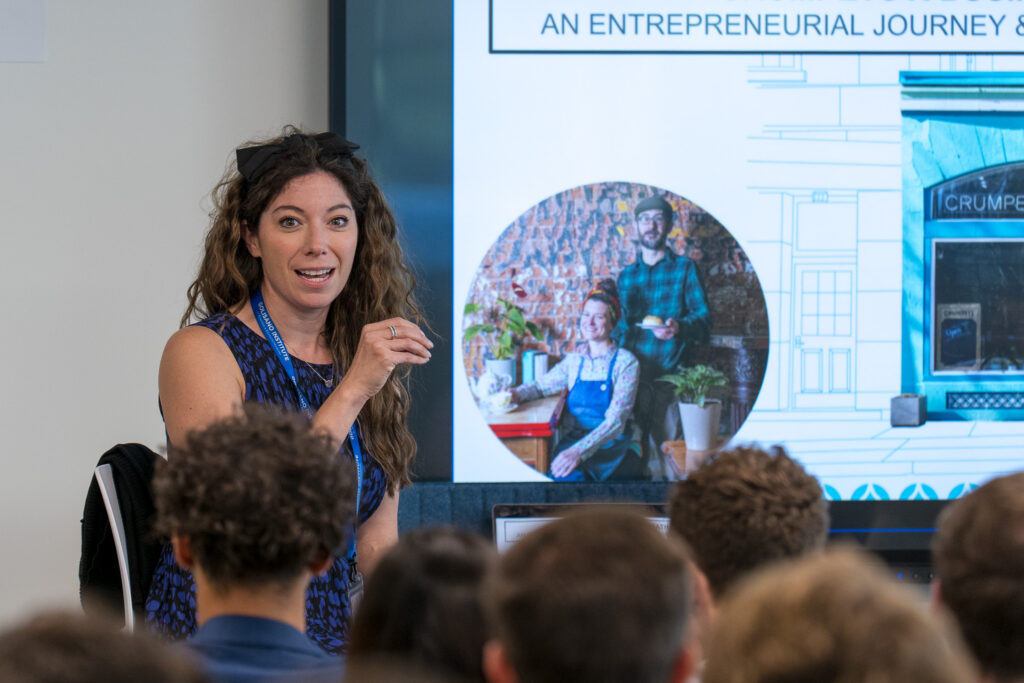
Nicole Coppola, who teaches business math, organized a project sponsored by Crumpets, a bakery in Rochester, New York.
One recent project saw students work with a local bakery across two courses, Introduction to Business Analytics and Business Technologies. Co-led by faculty members Dylan Burrows, Nicole Coppola, and Joel Menchel, the courses develop the fundamentals of managing the data lifecycle, from collecting and validating data to forecasting and modeling for decision-making. These skills are introduced early on in the Golisano Institute education because of their fast-growing importance in business today.
“In this world, we have so many opportunities to collect data,” Coppola said. “But where do you find the time to look at the data to analyze it?”
The (not so) secret ingredient
“Data is more than numbers on a spreadsheet. In business, it tells stories,” Burrows explained. “But to find the stories that are most meaningful, you need to understand the whole data life cycle.”
Last fall, the three co-leads gave business and entrepreneurship students in Quarter 1 the opportunity to use data analytics in a project sponsored by Crumpets, a cozy bakery located in downtown Rochester, New York. The small business has become a favorite for lovers of vintage tea sets along with the traditional English baked good that the shop is named after.
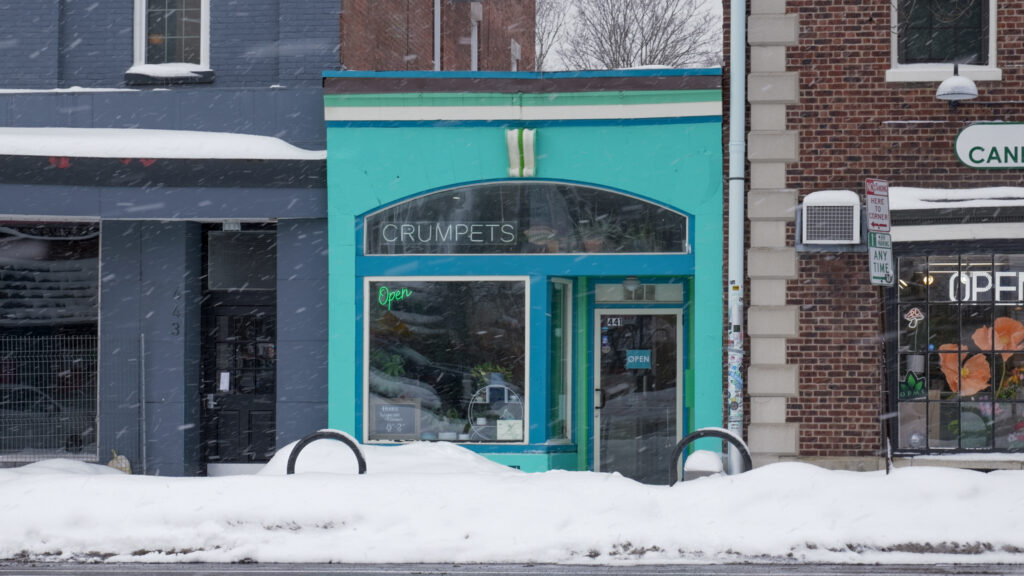
A view of Crumpets, a cafe and bakery that makes crumpets and jams from scratch.
Crumpets is owned by Evinn Neadow and William Downs. With just one part-time employee, the team handles every aspect of operations, from baking the crumpets and making jams to ordering supplies, marketing, and giving customers who come in a great experience.
“A lot of business owners make decisions based on intuition,” Coppola noted when introducing Crumpets to the class. “And the purpose of our course is to figure out what information we can utilize to make more informed business decisions.”
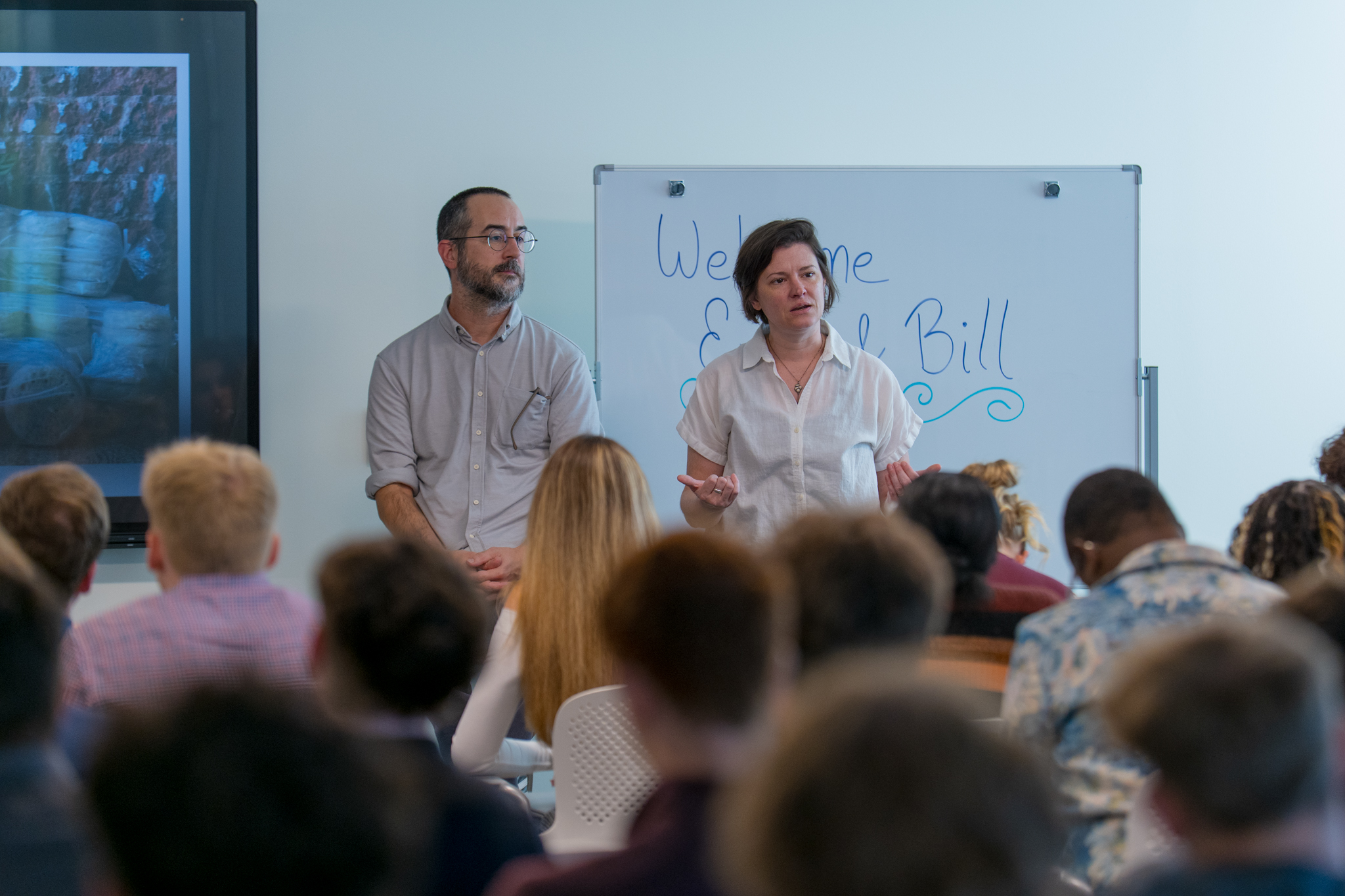
Neadow and Downs were invited to a question-and-answer session at the beginning of the quarter. Students interviewed the business owners about how they use data in their operation, a discovery process that informed the proposals that small groups presented later in the course.
Getting in the mix
Small businesses with tight staffing like Crumpets don’t often have the bandwidth to dedicate to data analysis, even if they know the effort would benefit them in the long run.
“We’re not looking at any of [our data] because, by the end of the day, it’s like, ‘What are we making for dinner for our children?’” Neadow said about the time crunch.
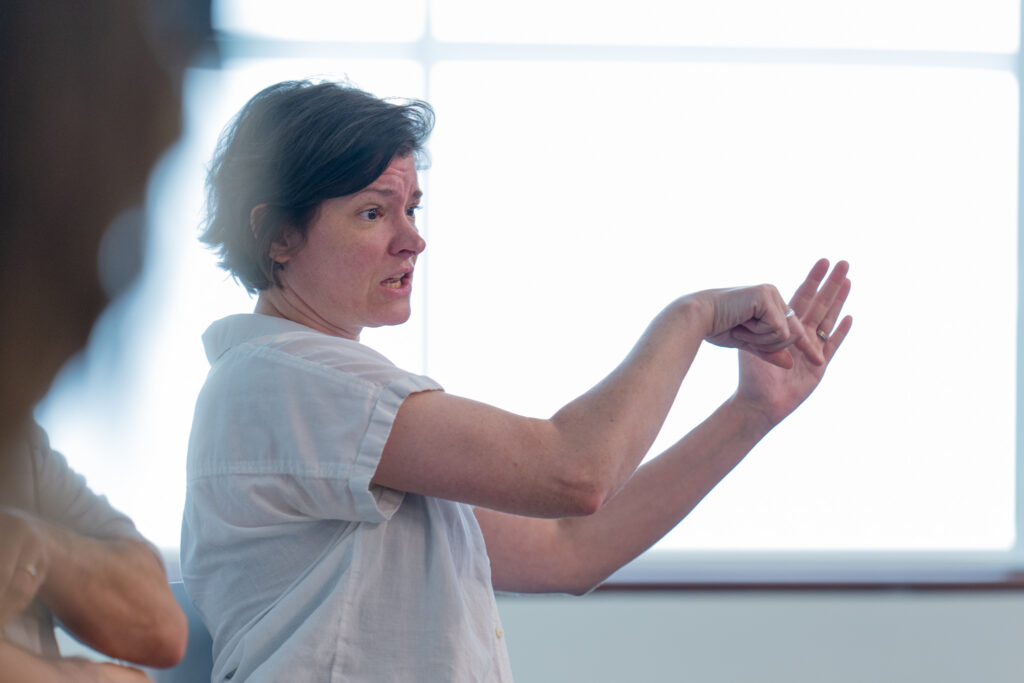
Evinn Neadow, co-owner of Crumpets, answered questions from students at the outset of the project.
“Data analytics isn’t just for large corporations. The tech exists now so that small businesses like Crumpets can take advantage of it,” observed Menchel. “We try to expose students to macro-trends while at the same time showing how they can be applied at the local level here in Western New York.”
The Q&A opened a window into all the ways a small bakery manages data in pursuit of its goals, such as building up to national distribution or expanding production without compromising a commitment to simple, high-quality ingredients.
“I thought it was super cool to talk to the owners and be able to actually look at it from almost every angle,” observed Owen McKenna (business & entrepreneurship) about interacting with Crumpets through the project.
The discussion eventually turned to Crumpet’s point of sale (POS) system, which stores transaction data for every customer. The POS data could offer a lot of useful insights, Neadow noted, such as high-demand times versus downtimes. This information could be used to schedule the bakery’s one employee at optimal points in the week.
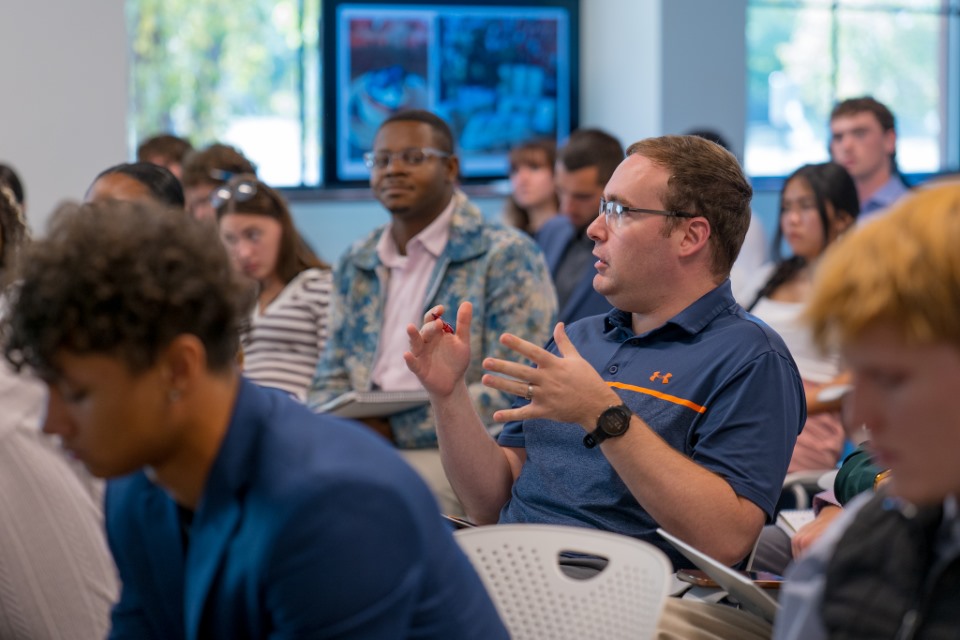
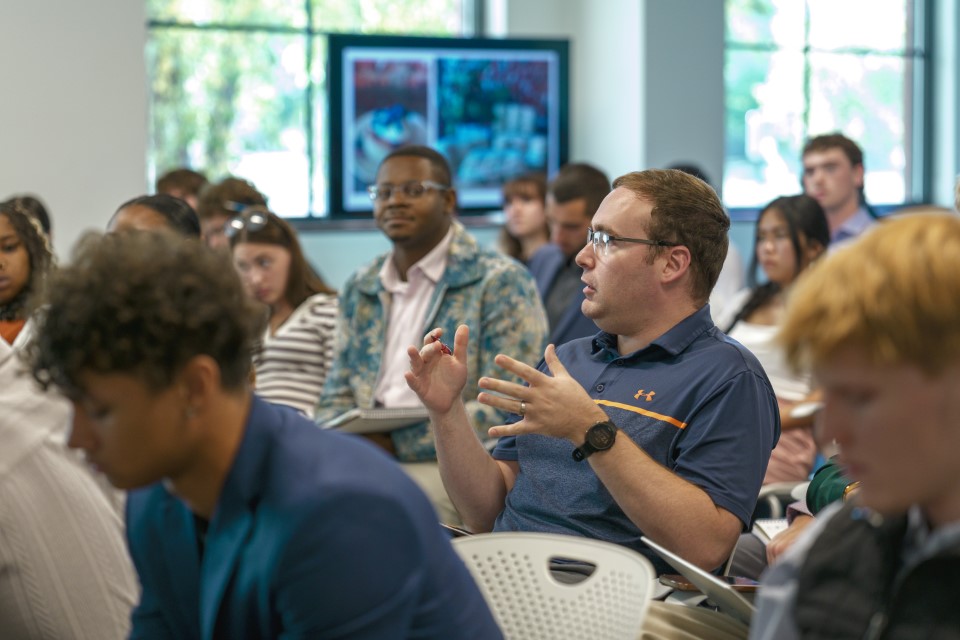
Student Tal Aizen makes a comment during an opening discovery conversation with Crumpets.
Tal Aizen, a student in the Advanced Certificate for AI & Business program, suggested looking at how seasonality—changes in seasons—might affect balancing staff hours with peaks in customer flow.
“Being able to use that information to say, ‘I could use you for two extra hours after you made crumpets on this day,’” Neadow replied. “Yeah, that would be helpful.”
Recipe for success
The sponsored projects are one way students get comfortable with the “messiness” of business as it happens in the real world at Golisano Institute. That’s according to Scott Baker, Ed.D., chief academic officer and vice president for academic affairs.
“When a student has to figure out why a local business is losing customers, or how a local nonprofit can optimize its workflow, or how to price a product no one’s sold before, there’s no answer key,” Baker explained. “The more we put students in situations where they have to think on their feet and make real decisions based on data analysis, the more prepared they are to do it after they leave here.”
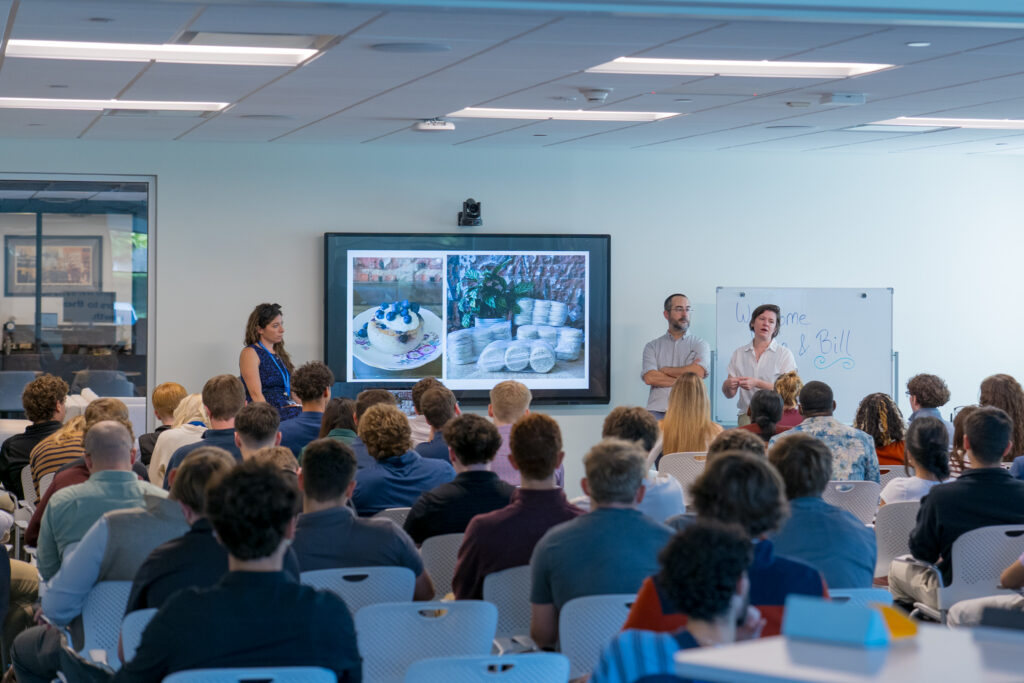
Students from the two-year business & entrepreneurship and one-year AI & business programs participated in the project.
Hassan Williams (business & entrepreneurship) is in the third quarter of the two-year program. He thought the opportunity to access a local business’s POS system in real time was an incredible learning experience.
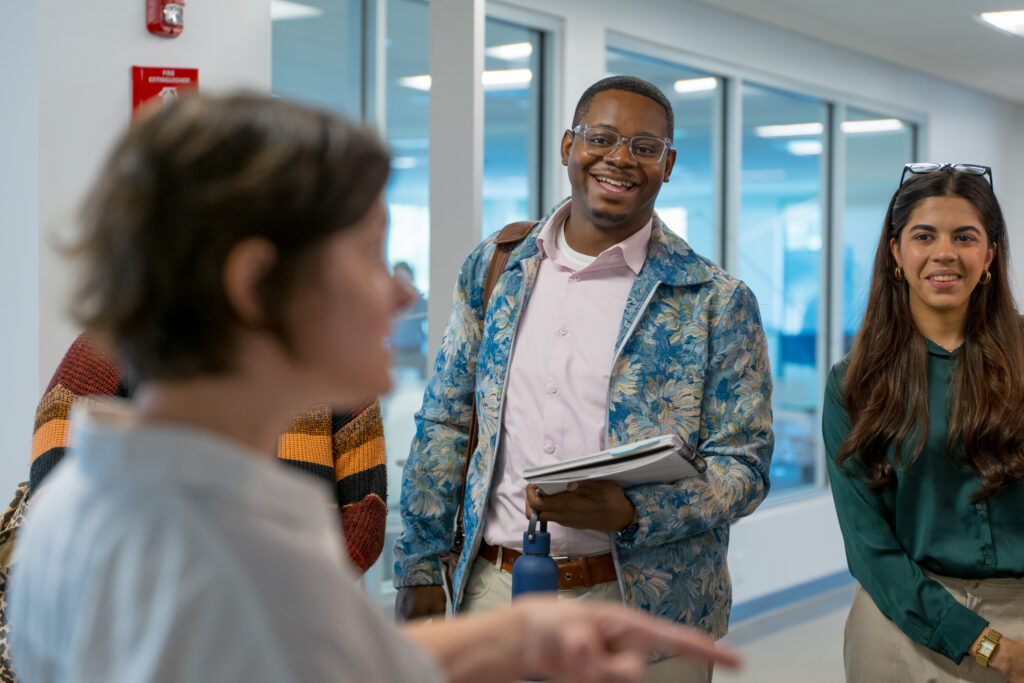
Students Hassan Williams (business & entrepreneurship) and Marium Memon (AI & business) listen to Evinn Neadow, co-owner of Crumpets, at Golisano Institute’s Rochester campus.
“It wasn’t, ‘This is how you’re supposed to fix the problem by the book,’” he said. “It was more, ‘These are some lessons that we’re going to teach you, and then we’re going to provide you with some information, and it’s up to you to take this information and to analyze it in a way that the problem will best be solved.”
After a successful project, the bakery has a new project underway with students in the data analytics and business technology courses.